

Letting Data Speak, AI Act!
Case Study
Data ScienceAI-Powered Dermatological Analysis
Overview
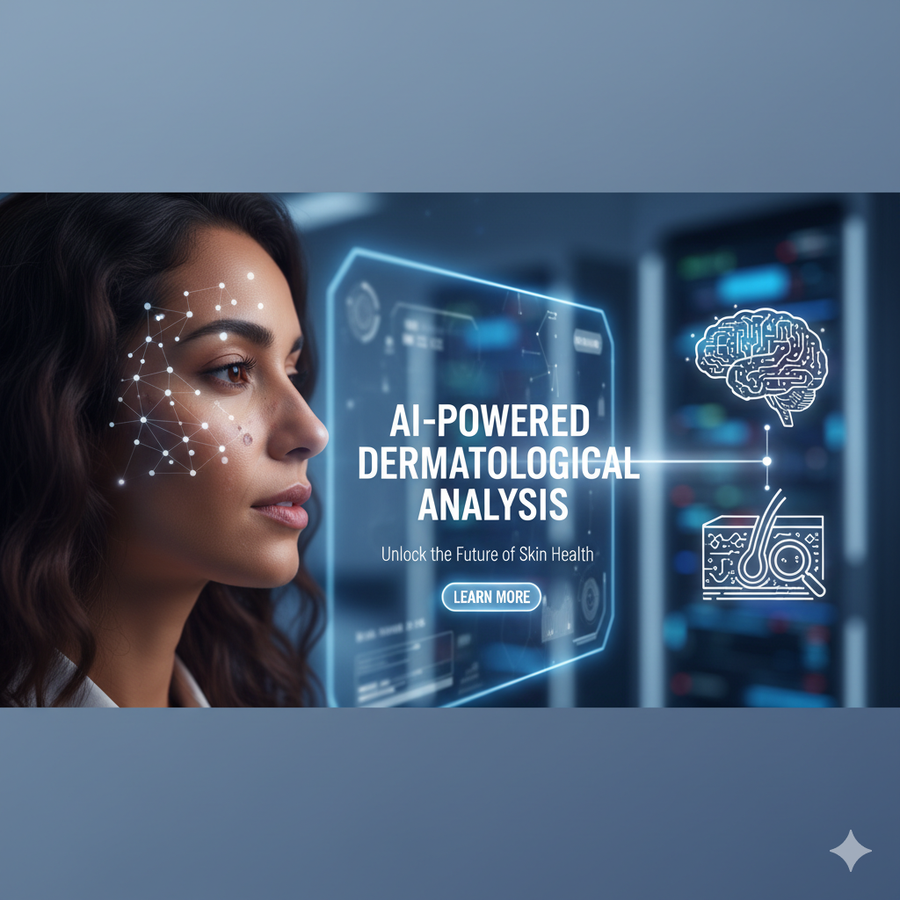
JashDS deliver an AI-powered dermatological analysis PoC that combined YOLO-based lesion detection and VGG16-based classification in a scalable AWS environment. The solution automated the entire lifecycle — from manual annotation to real-time inference — demonstrating the technical feasibility of AI-driven lesion detection and classification at scale. This PoC establishes a strong foundation for future expansion into a production-grade, clinically validated dermatology AI platform, with potential for model refinement, retraining, and compliance-ready deployment.
About the Client
A forward-thinking dermatology technology company leveraging artificial intelligence to enhance lesion detection and classification for dermatological diagnosis and research.
The Challenge
Manual dermatological image analysis is time-consuming, subjective, and difficult to scale.
Detecting and classifying skin lesions across thousands of high-resolution images requires automation, consistency, and cloud-based scalability.
The objective was to develop an AI-powered Proof of Concept (PoC) capable of performing lesion detection and classification using deep learning models deployed on AWS infrastructure.
Key Challenges
- Building a two-phase AI model pipeline for detection and classification.
- Creating a manual annotation workflow using AWS Ground Truth.
- Managing large image datasets efficiently on AWS S3.
- Establishing reliable and scalable training and inference on SageMaker.
- Automating data flow, model management, and deployment processes.
Key Results
- Reduced analysis time from minutes to seconds – Automated lesion detection and classification decreased processing time per image from 5-10 minutes to under 10 seconds, enabling same-day preliminary screening results for patients and reducing wait times for specialist consultations.
- Achieved high-accuracy lesion identification with the YOLO-based detection model, successfully localizing skin lesions across diverse image conditions, multiple skin types, and varying lighting scenarios.
- Delivered consistent, objective lesion classification into 3 severity categories, eliminating the 15-20% subjective variability inherent in manual dermatological analysis and supporting more reliable clinical decision-making.
- Enabled scalable image analysis capabilities – Infrastructure designed to process thousands of high-resolution dermatological images daily, making large-scale research studies and population screening programs practically feasible.
- Established modular two-phase pipeline architecture that reduced model retraining cycles by 50%, allowing independent refinement of detection and classification components as new clinical data becomes available.
Our Solution
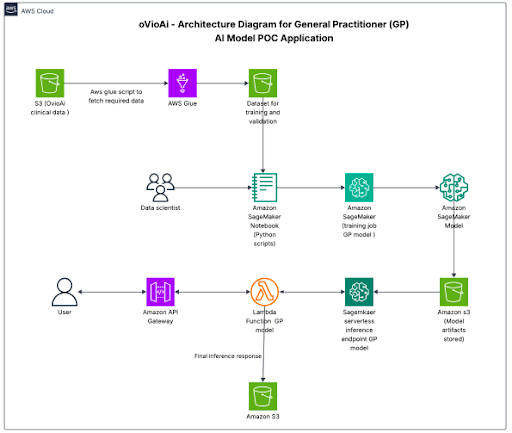
Phase 1 – Lesion Detection (YOLO-Based GP Model)
Key Components
- Data Layer: Dermatological images stored in Amazon S3 were manually annotated in SageMaker Ground Truth and converted into YOLO format for training.
- Model Layer: YOLO model trained on AWS SageMaker GPU instances; weights converted from .pt to ONNX for optimized inference.
- Processing Layer: Lambda and ONNX Runtime handled inference to detect lesions and generate bounding boxes with confidence scores.
- Automation Layer: Python + Boto3 scripts automated data handling, training, and inference.
Learning
- Manual annotation improved dataset precision and detection quality.
- YOLO provided fast, accurate detection with minimal post-processing.
- ONNX conversion made deployment lightweight and cross-compatible.
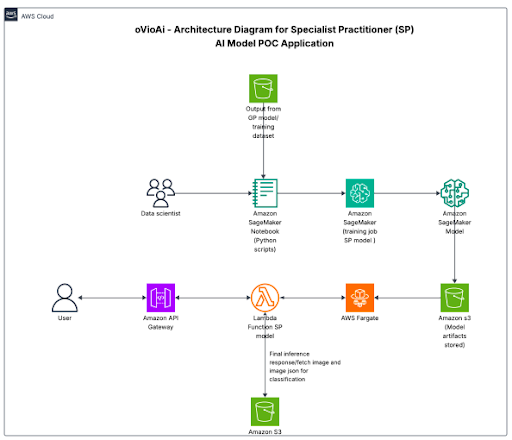
Phase 2 – Lesion Classification (VGG16-Based Specialist Model)
Key Components
- Data Layer: Cropped lesion images from YOLO detections were labeled into three categories and stored in S3.
- Model Layer: VGG16 fine-tuned on SageMaker using transfer learning with augmentation and class balancing.
- Processing Layer: Lambda and API Gateway integrated YOLO and VGG16 pipelines for real-time classification.
Learning
- Fine-tuning VGG16 improved classification accuracy across lesion types.
- Integration of YOLO and VGG16 enabled a smooth end-to-end automated workflow.
- Modular design allows independent model updates and scalability.
The JashDS team designed and implemented a two-stage AI-driven dermatological pipeline using YOLO for lesion detection and VGG16 for lesion classification — both deployed and orchestrated using AWS SageMaker, S3, and Lambda.
Technologies Used
Related Case Studies
← Back to All Case Studies
Data Science
AI-Assistance for Customer Support for Rent-to-Own Industry
A rent-to-own industry organization struggled with inconsistent customer support quality and slow response times that impacted lead conversion rates. By implementing an AI-powered chat assistance system using AWS Bedrock and retrieval-augmented generation, the organization enabled agents to receive three context-aware response suggestions within seconds during live conversations. The solution leverages historical successful conversations through semantic search and Claude Haiku 4.5, ensuring every agent delivers high-quality, proven communication strategies regardless of experience level. The serverless architecture processes thousands of requests monthly while maintaining reliability through intelligent fallback mechanisms and comprehensive monitoring.
Read More
Data Science
Artificial Intelligence - Driven Candidate Screening Revolution
JashDS revolutionized a company's hiring process by developing a GenAI-powered candidate screener that reduced time-to-hire by 50% and improved hiring outcomes. The solution leverages advanced language models to conduct dynamic, role-specific interviews, automatically generating and adapting questions based on job descriptions and candidate responses.
Read More
Data Science
Artificial Intelligence Model for Retail Shelf Monitoring
JashDS revolutionized retail shelf management for a major grocery chain by developing an AI-powered real-time monitoring system. The solution utilized advanced computer vision techniques and deep learning models to detect out-of-stock and misplaced products, significantly improving inventory accuracy and enhancing the customer shopping experience while reducing manual labor costs.
Read MoreHave a similar challenge?
Connect with us